Jewellery is a trust purchase. The customer is often spending more than they planned, choosing something they will wear every day, and doing it in a room full of small, valuable objects. The design has to make that feel calm rather than intimidating. It also has to protect the stock, satisfy the insurer and let staff work efficiently behind the counter.
Good jewellery store design balances four things at once: a layout that moves people from the window to the case to the close, display cases that make the product readable, lighting that shows gemstones and metal truthfully, and security that is present without turning the showroom into a fortress. This guide sets out how those four pieces fit together, plus the materials, consents and cost drivers that decide the final result.
Key takeaways
- Plan the customer route from window to hero case to try-on to close, with a clear staff route behind it.
- Let the product be the brightest thing in the room, then keep the surrounding light calm.
- Choose display case lighting for colour accuracy and low heat, not just sparkle.
- Layer security: sightlines, laminated glass, locks, alarm, safe access and staff zoning.
- Use materials that tolerate cleaning, fingerprints and the occasional ring or watch on a stone top.
- Check accessibility and consent requirements before the joinery is drawn.
What makes jewellery store design different
A jewellery showroom carries a very high value in a very small area. That changes the planning logic. High value stock usually goes back into the safe at close, so the back of house is part of the sales process, not a storage afterthought. Cases are worked from both sides. Staff need to reach stock, clean glass and reset displays without walking through the customer zone.
The purchase is also emotional and slow. Customers browse, compare, ask questions, try pieces on and often return. The room needs places to pause, a mirror with good light, a seat for a partner or friend, and a consultation point that feels private without being hidden. A showroom that only supports a quick transaction will lose the sales that need a second visit.
Layout: from threshold to close
Start with the window and the threshold. The window is the first display case and should carry one clear story rather than every product category. Inside, the route usually runs from a low or open hero case near the entry, through secondary cases along the walls, to a try-on zone with a mirror and seat, and then to a consultation desk or private room. The service and repair counter, if you have one, should be separate from the browsing route so that a repair drop-off does not interrupt a sale.
Plan two circulation loops. The customer loop is generous and easy to read, with room to stop beside a case without blocking the aisle. The staff loop runs behind the counters and connects the safe, the workshop, the wrap point and the front of house. The two loops should touch only at the transaction point. That single planning move improves security, service speed and the feeling of calm in the room.
Accessibility belongs in the same drawing. Counters should have at least one section at a height that works for a seated customer, with clear space beside it for a wheelchair or pram. The Building Code’s D1 access routes guidance and NZS 4121 set the expectations for accessible routes and clear space, and shops must provide reasonable access for people with disabilities. When an existing building is altered, access must be upgraded as nearly as is reasonably practicable. A step up to a try-on area may look elegant in a render, but it excludes customers and complicates consent.
Display cases that sell
A display case has three jobs: protect the stock, make the product easy to see, and make it easy for staff to reset. The best cases resolve all three with a simple internal layout. Trays, inserts and removable pads let staff change a display in minutes. A lock that needs two hands and a key while a customer waits is a design fault, not a security feature.
Glass choice is easy to underestimate. Standard float glass has a green cast, visible at the edge and in thicker panes, that can cool the look of diamonds and white metal. Low-iron glass costs more but keeps the product colour neutral. Laminated glass adds security and holds together if struck. For the top of a counter case, a laminated low-iron glass with a polished edge is a common compromise between clarity and safety. Glass in a public area must meet the human impact safety requirements of NZS 4223.3.
| Case type | Best for | What to watch |
|---|---|---|
| Counter case | Rings, earrings, everyday pieces, impulse gifts | Sightline from standing height and a lock the staff can work discreetly |
| Wall case | Watches, higher value pieces, brand stories | Glare from ceiling lights and cable access for case lighting |
| Island or hero case | Campaign pieces, new collections, a single statement | Circulation on all sides and a clear route past it |
| Window case | The first story, seasonal changeovers | Heat and UV from daylight, and access for window dressers |
| Consultation tray | Private viewing at the desk | A soft surface, good task light and a discreet return path to the safe |
Lighting for gemstones and metal
Jewellery lighting is two jobs disguised as one. The first is display lighting: making a piece catch the eye from across the room. The second is colour assessment: letting a customer and a salesperson see the true colour of a stone and the true tone of a metal. A fitting that does the first job brilliantly can fail the second.
For the counter where customers compare stones, use a neutral white with a high colour rendering index. Around 4000 K with a CRI above 90, and a good R9 value for reds, is a common retail choice. Formal gemological grading uses standardised daylight-equivalent light, which is a different job. For the surrounding room, a warmer 3000 K light feels more comfortable and makes skin and metal look rich. Keep the two layers separate so staff can switch the assessment light on at the counter without changing the mood of the whole showroom. Our guide to retail lighting design covers the wider store.
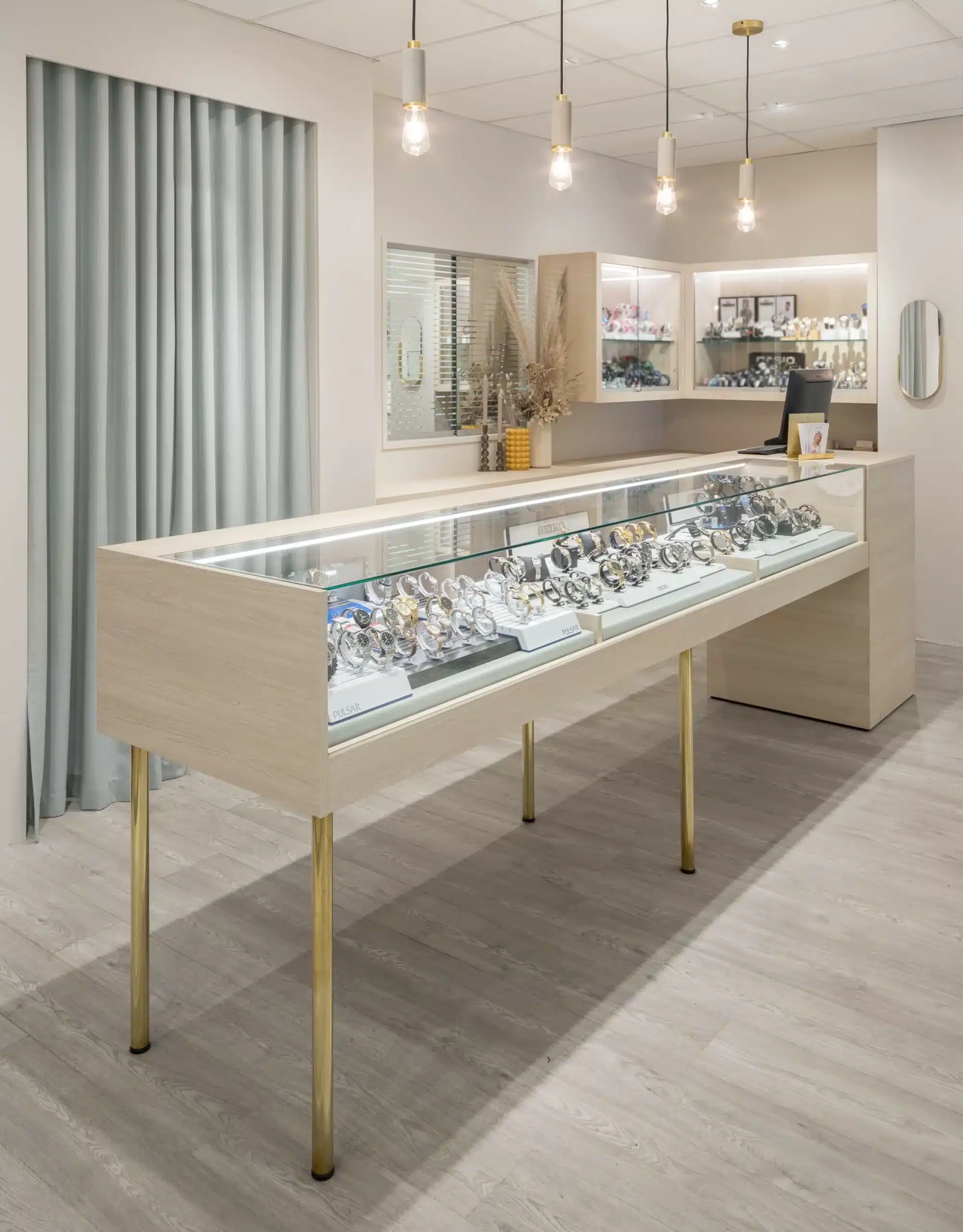
Three technical points protect the product. Heat can dry out opals and pearls, affect treated stones and age case finishes, so specify LED and keep drivers outside the case where possible. Prolonged strong light can fade some stones, such as kunzite and some amethyst and topaz, and can yellow pearls and other organic materials. LED adds very little UV, so the main control is UV filtering in daylit windows; laminated glass blocks most of it. And test the lighting with real stock, not a white card. A stone that looks correct under a sample at the lighting supplier can look dull once it is inside a glass case with a dark insert.
Beam control matters as much as colour. A narrow beam creates sparkle and shadow, which suits faceted stones. A wider, softer beam shows the whole piece and suits opaque stones, pearls and metal. Adjustable fittings let you tune the display without rebuilding the ceiling, and a dimming scene for evening trading keeps the window readable without flooding the mall corridor.
Security without a fortress
Security is a series of layers, not a single product. The outer layer is the shopfront and the window: laminated glass, strong frames and a clear view in from the street or mall. See our article on storefront design for that layer on its own. The next is the case: locks, hinges, laminated tops and a layout that keeps high value pieces within staff sight. Then comes detection: an alarm, CCTV coverage of the cases and the safe, and a staff duress point. Finally there is the safe and the cash handling routine, which should be designed into the back of house rather than added later.
Crime prevention through environmental design, usually shortened to CPTED, is the planning discipline behind the softer measures: natural surveillance, clear sightlines, good lighting and a sense of ownership at the entrance. The Ministry of Justice guidelines for crime prevention through environmental design set out how those principles apply to retail and street environments. In practice, a showroom that is visible, well lit and staffed from the front is a less attractive target than a dark room with a blind corner.
Your insurer will have its own requirements, and those requirements should be on the table at concept stage. Safes, grilles, shutters, alarm signalling and camera coverage all affect the plan, the joinery and the budget. A security consultant is worth involving early on a high value showroom, because retrofitting a safe or a shutter into a finished interior is expensive and rarely looks considered.
Materials and finishes
The material palette has to do two jobs: make the product look its best and survive daily cleaning. Dark, glossy surfaces make diamonds pop but show every fingerprint. Pale stone and timber make the room feel warm but can compete with the product. The usual answer is a calm, mid tone background with one darker or richer moment behind the hero case.
Solid surface and quartz are practical for counters because they can be repaired and cleaned. Timber veneer brings warmth but needs a durable topcoat near the transaction point. Brushed brass and bronze age gracefully but need a consistent lacquer or patina strategy. Leather and wool add softness to a consultation desk, while a hard floor is easier to clean but noisier. Acoustic treatment is often overlooked in small showrooms, where hard surfaces and a low ceiling make a quiet conversation feel public.
Brand, storytelling and the window
Jewellery brands sell provenance as much as product. The interior can carry that story through a materials palette, a making station, a display of design drawings, or a small heritage case. The important rule is restraint: one story per zone, one focal point per case, and enough empty space for the product to read as valuable. Our luxury retail design guide covers the premium end of that spectrum.
The window is the most valuable square metre in the store and the most frequently changed. Design it for change: adjustable shelves, a hidden lighting track, a removable backdrop and access that does not require dismantling the display. A window that takes a day to reset will be reset less often, and a stale window is worse than a simple one.
Consents, accessibility and the fit-out team
Jewellery fit-outs usually involve a landlord approval and, depending on the work, a building consent. Structure, changes to fire safety systems, plumbing and drainage are the common consent triggers; a change of use is a separate council notification. The shopfront, the security shutter and any illuminated signage may have separate approval paths. The Ministry of Business, Innovation and Employment publishes the Building Code compliance guidance, and Retail NZ is the industry body for retail operating questions.
Bring the whole team together early: the designer, the shopfitter, the electrician, the lighting supplier, the security installer and the insurer’s requirements. A jewellery showroom has little tolerance for late changes, because the cases, the lighting and the alarm all converge on the same small area. A coordinated drawing set is the cheapest form of insurance.
Cost drivers
Budgets are driven less by the floor area than by the number of cases, the quality of the glass and lighting, the security specification and the amount of custom joinery. The table below shows where the money goes.
| Cost driver | What pushes it up | How to control it |
|---|---|---|
| Display cases | Custom sizes, low-iron laminated glass, integrated lighting, specialist locks | Standardise case depths and repeat the internal tray system |
| Lighting | High CRI fittings, adjustable tracks, dimming scenes, testing with real stock | Separate ambient, accent and assessment circuits from the start |
| Security | Safes, shutters, alarm signalling, camera coverage, laminated glass | Agree the insurer’s schedule before the joinery is priced |
| Materials | Natural stone, solid timber, specialist metal finishes, leather inserts | Spend on the surfaces the customer touches and the hero case |
| Joinery and fit-out | Curves, integrated reveals, hidden fixings, small site tolerances | Resolve the shopfront and case dimensions before fabrication |
| Approvals and programme | Late design review, signage variations, after-hours access | Submit a complete approval pack and book access early |
Case study: Wright's Jewellers, Pukekohe
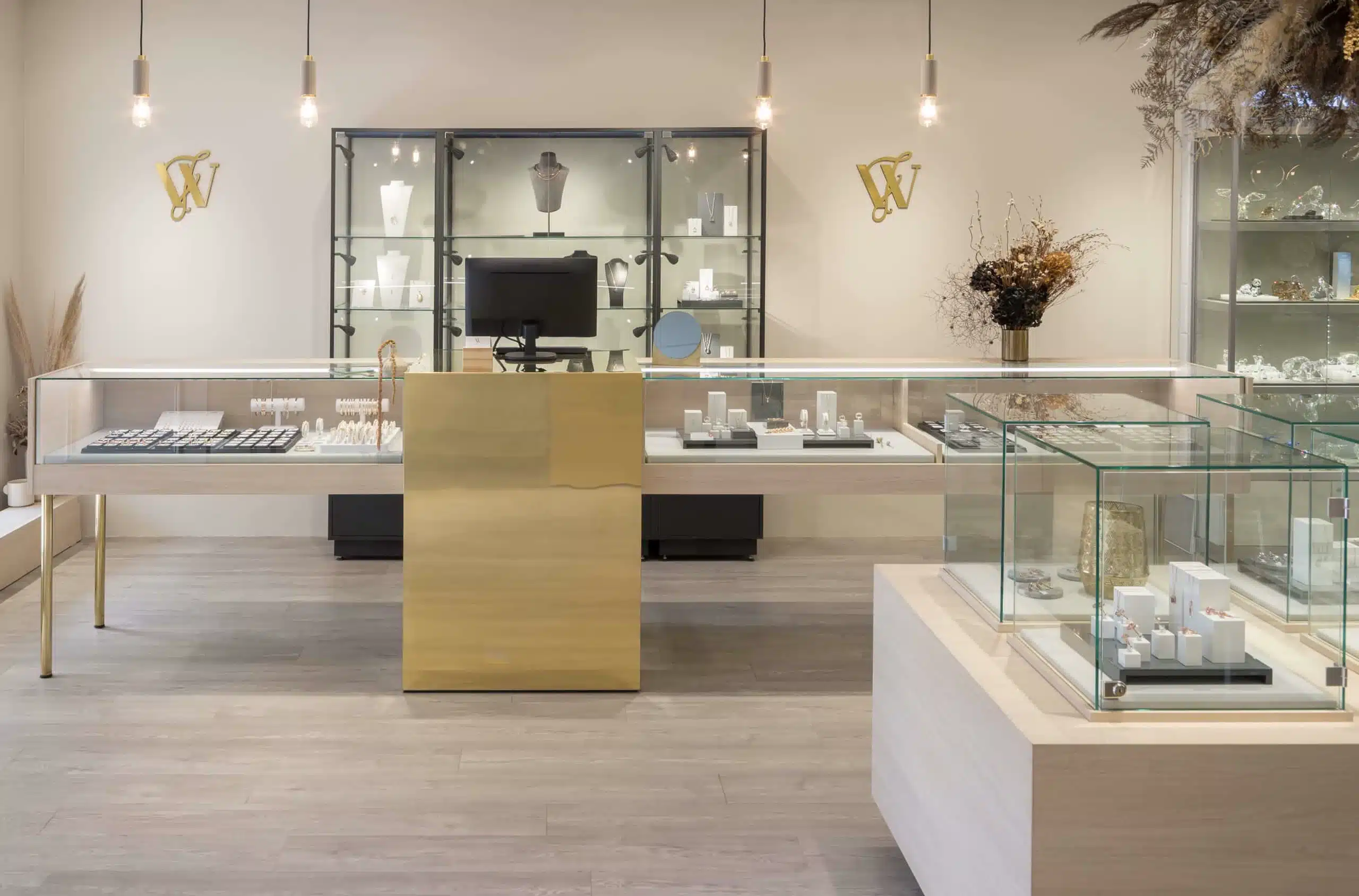
Wright's Jewellers is a family business in Pukekohe, first opened in 1912 by Walter Wright. Our practice fitted the shop out in 1999 for his son, Gary Wright. Twenty years later the business passed to his daughter Rhian and her partner Ben Paul, who asked for a whole new look for a new generation and a move to higher-end, trend-led jewellery.
- Keep the history that matters. The clients asked to keep a number of wall and grandfather clocks, while the old dark timber and navy carpet made way for the new identity.
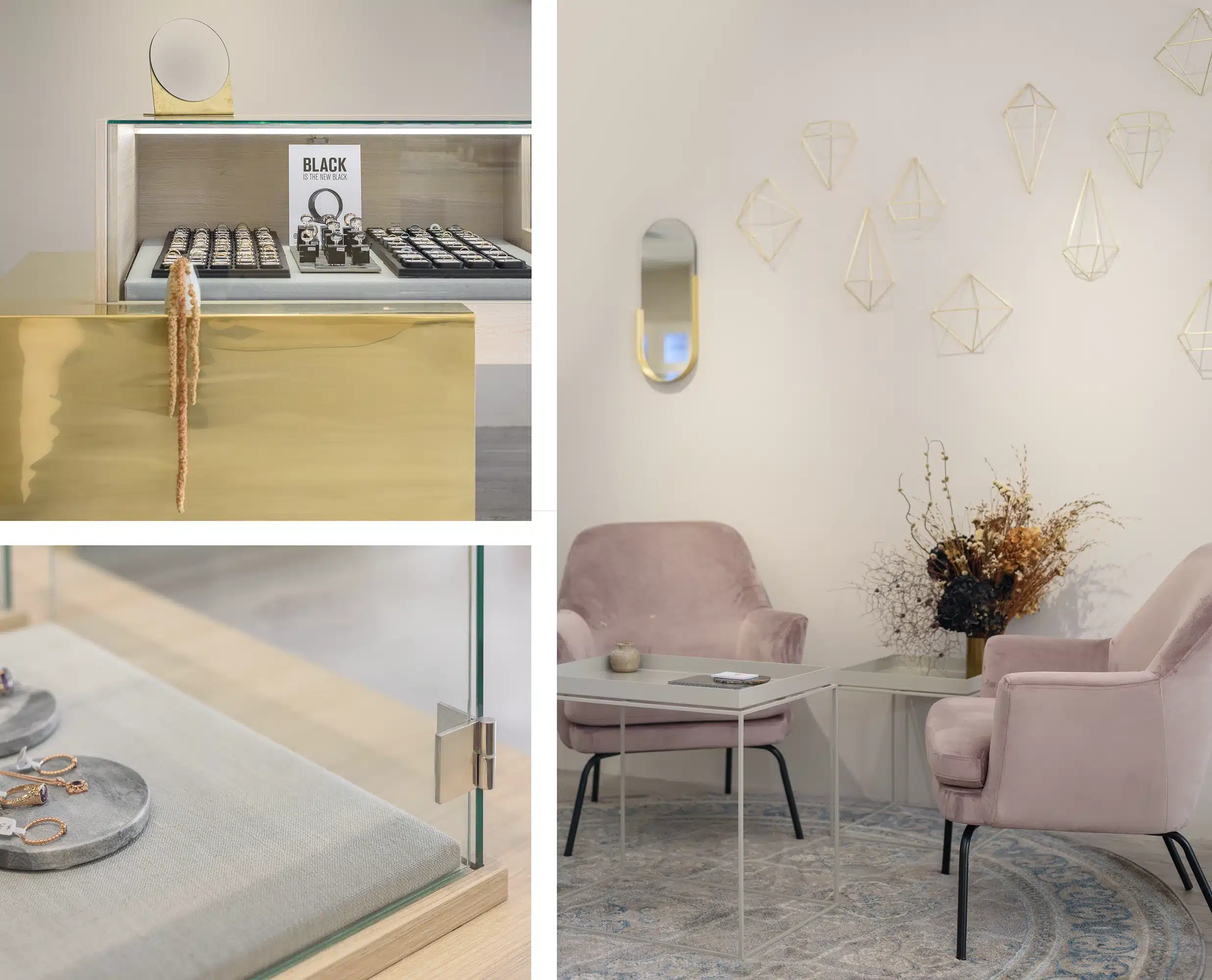
- Open the counters. The new display counters are open underneath, which makes the store feel bigger and reduces the sense of separation between staff and customer.
- Use the finishes to tell the story. Polished brass accents nod to the shop's history in modern shapes, set against light ash timber-look laminate and soft grey walls, cabinets and drapery.
- Spend where it shows. Laminate stood in for real timber where the budget would not stretch, and the clients managed much of the build with local contractors. The project came in almost exactly on budget.
Planning a fit-out?
Tell us about the space, the collection and the security requirements you already know about. We can test the layout, the case plan and the lighting layers before you commit to joinery.
Planning a fit-out?
Tell us about your site, timing and brief. Studio Gascoigne designs retail, hospitality and workplace interiors across New Zealand.
Frequently asked questions
What lighting is best for diamonds and gemstones?
Use a neutral white with a high colour rendering index for assessment and a warmer white for ambience. Keep the beam narrow for faceted stones and wider for opaque stones and metal, and test the result with real stock inside the case.
How much space does a jewellery showroom need?
Enough for a window story, a hero case, wall cases, a try-on zone and a consultation point without overlapping the customer and staff routes. Small showrooms work when storage is vertical and the back of house is planned as part of the sales flow.
Do jewellery stores need building consent?
It depends on the work. Structural work, changes to fire safety or other specified systems, and most plumbing or drainage work usually need building consent. Changing the use of the space is a separate step: you notify the council and the building may need upgrading. Landlord approval is separate from consent and usually comes first, and signage may need its own approval.
How do you balance security and a welcoming showroom?
Use layered security that sits behind the design: laminated glass, discreet locks, good sightlines, alarm and camera coverage, and a safe that is planned into the back of house. The customer should feel the welcome first and the security second.
What display cases work for a small jewellery store?
Counter cases for everyday pieces, one hero case for the campaign, and slim wall cases for watches or higher value items. Repeat the case depth and lighting detail so the room feels calm and the stock is easy to reset.
How often should a jewellery showroom be refreshed?
Plan a light refresh when the collection or brand changes, and a deeper review when the lighting, cases or security no longer meet the insurer’s requirements. The window should change far more often than the interior.
Related reading
- Showroom design for the wider principles behind display-led retail spaces.
- Retail store design ideas that boost sales and brand identity for the store around the cases.
- Visual merchandising ideas from real NZ stores for window and case storytelling.
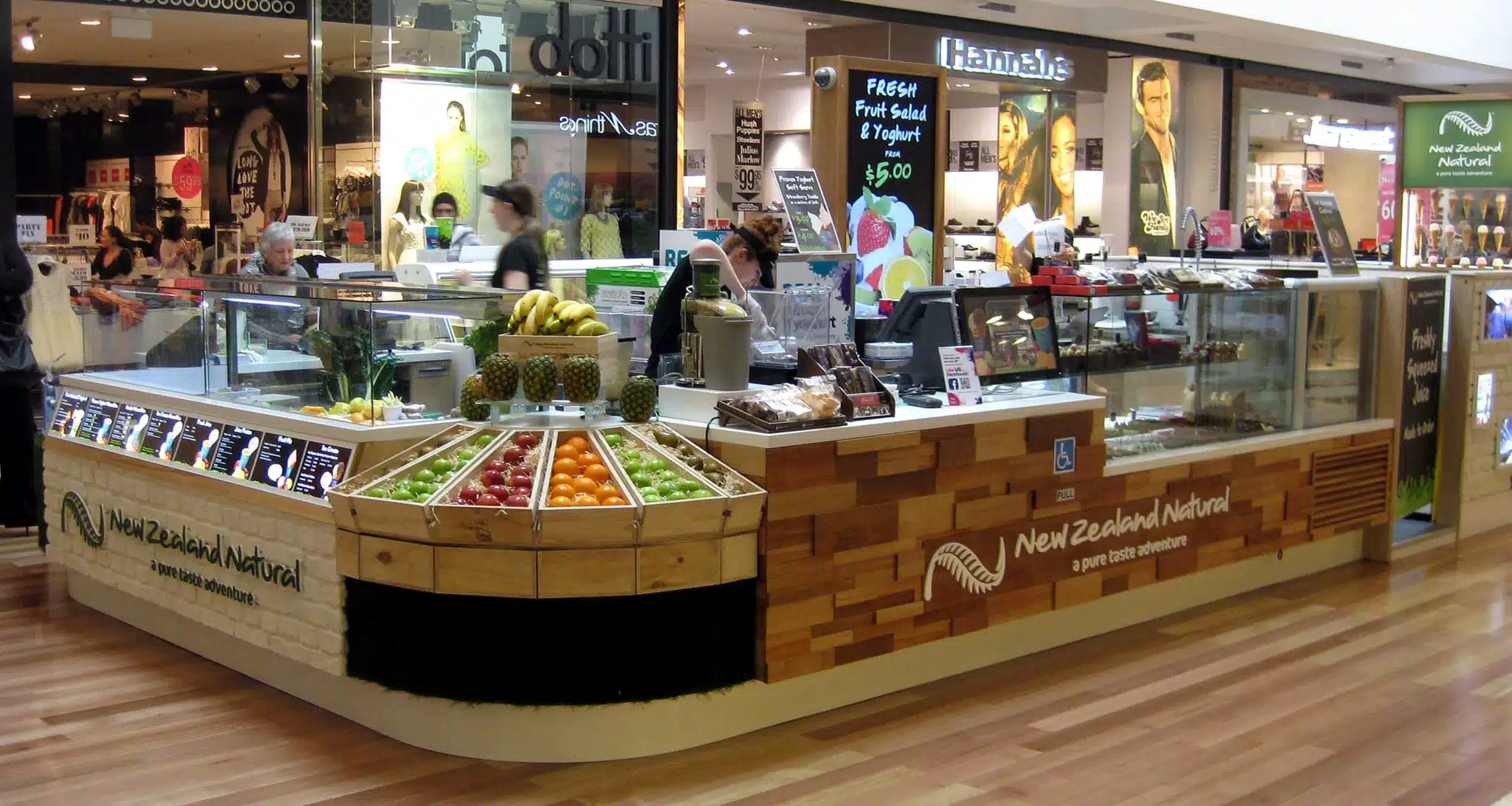
- Kiosk design for a small retail footprint in a mall corridor.
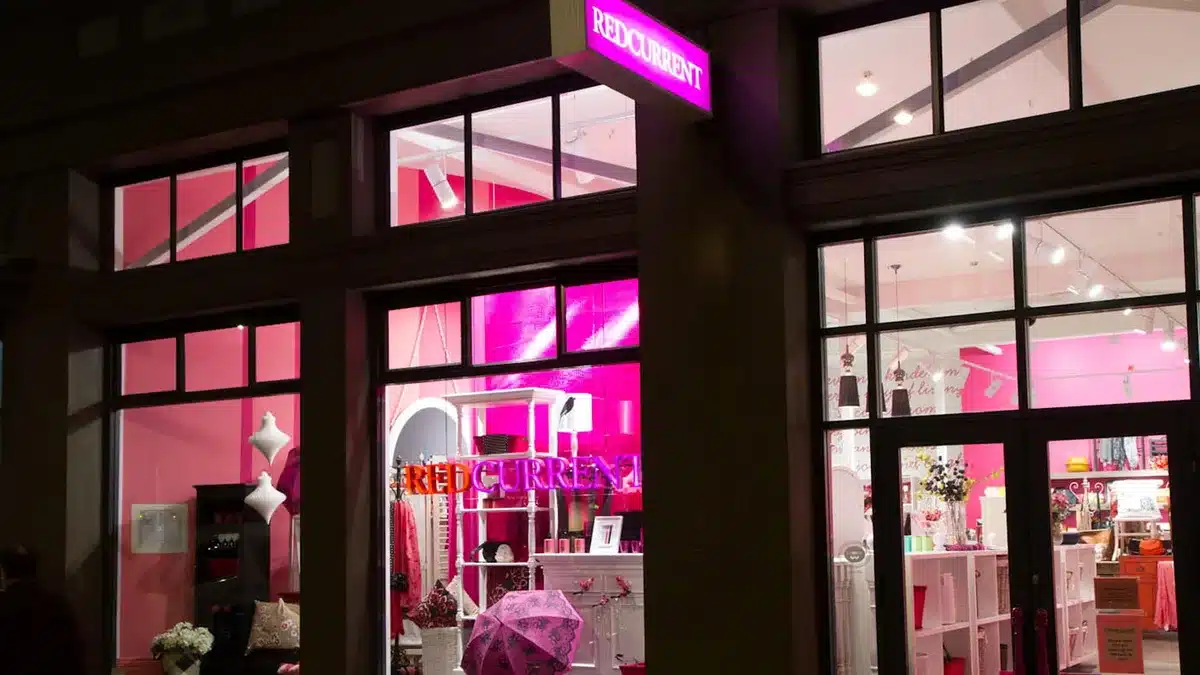
- The jewellery display in our Red Current Wellington project for a real NZ example.