The best lighting for a retail store layers three kinds of light: even ambient light so customers can move around comfortably, accent light that makes the product stand out, and a shopfront that is visible from a distance, day and night. Use LEDs with good colour rendering, pick one colour temperature that suits the brand, and put the brightest light on the merchandise, not the floor.
Key Takeaways
- Plan three layers: ambient, accent and display or shopfront lighting.
- Choose LEDs with a colour rendering index (CRI) of 90 or more for fashion, food and cosmetics, where true colour sells the product.
- The European workplace lighting standard EN 12464-1 sets 300 lux for a shop sales area and 500 lux at the checkout. Treat those as a floor, not a target.
- Switching to LEDs alone can cut lighting costs by up to 70%, according to EECA, New Zealand’s energy efficiency agency.
- Design the lighting with the fitout, not after it. Fittings, joinery and ceilings have to work together.
Why Lighting Matters in a Retail Store
Lighting is the part of a fitout customers notice without noticing it. It decides whether a shop reads as open and inviting from the mall concourse, whether colours on the rack look the same as they will at home, and whether the eye goes to the feature table or to an empty corner.
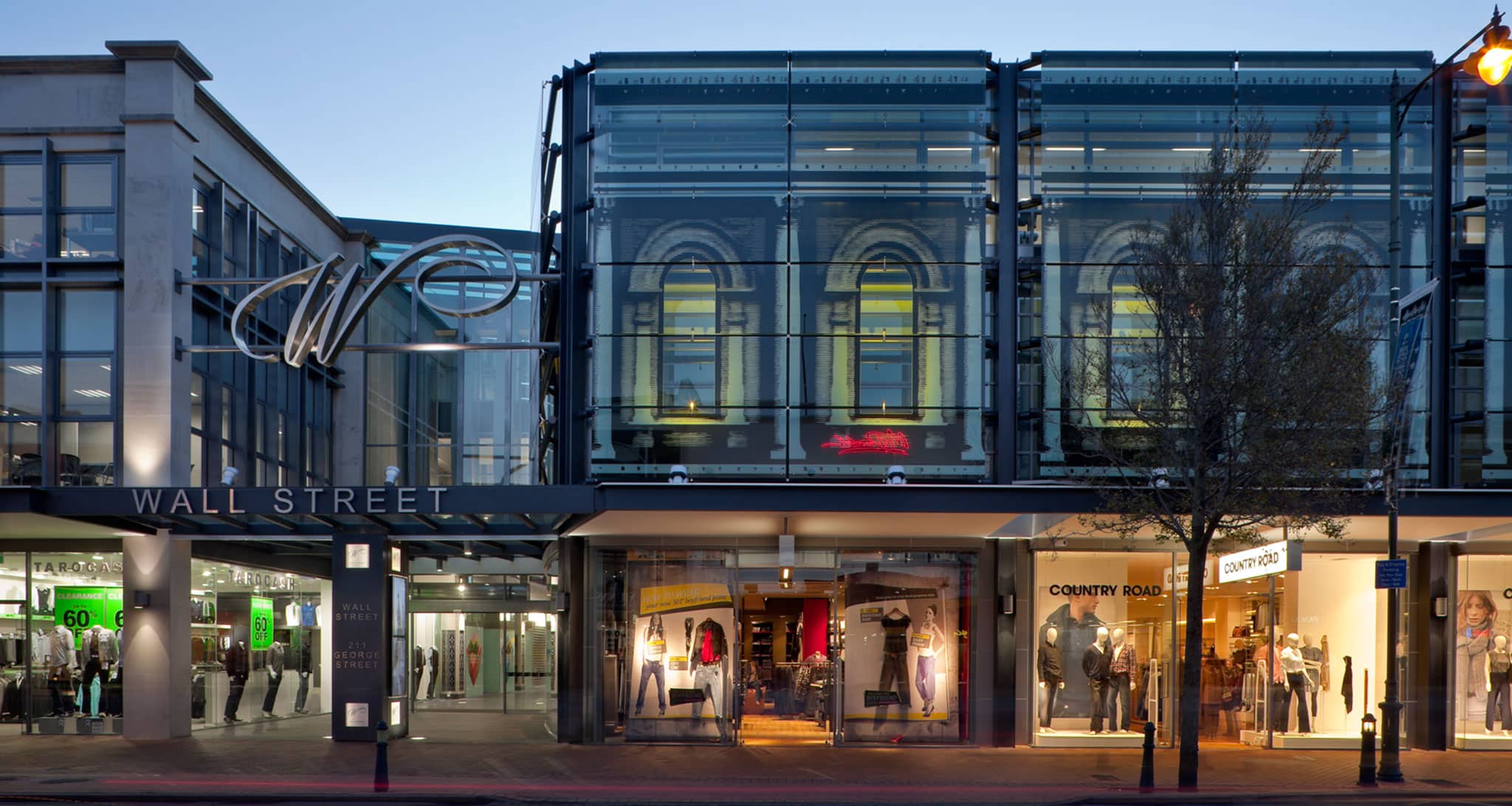
It is also a running cost. Lights in a store are on for every trading hour, so the fittings you choose affect power bills for years. That is why we treat lighting as a design element from the first concept, alongside layout and joinery. On Wall Street in Dunedin, for example, our brief covered the overall concept, interior, lighting and retail design together, and the project won Silver at the DINZ Best Awards in 2009 and an Award of Excellence at the IESANZ Lighting Awards.
The Three Layers of Retail Lighting
| Layer | What it does | Typical fittings |
|---|---|---|
| Ambient (general) | Lets customers see and move safely; sets the overall mood | Recessed downlights, linear LEDs, pendants in high ceilings |
| Accent | Pulls the eye to products, walls and focal displays | Adjustable track spots, recessed adjustable downlights |
| Display and shopfront | Makes the store visible and lights windows, signage and feature units | Illuminated signage, light boxes, lit shelving and window spots |
Good retail lighting is mostly about contrast. If everything is equally bright, nothing stands out. A brighter feature wall or table against softer general light gives customers a reason to walk further in.
10 Steps to Better Retail Lighting
1. Start with the brand and the customer
A premium boutique and a value homewares store need different lighting. Decide how the store should feel before choosing fittings. Warmer, softer light with strong accents tends to feel more intimate; brighter, even light feels busy and efficient.
2. Light the merchandise, not the floor
Aim the strongest light at walls, shelves and tables where products sit. Vertical surfaces matter most, because that is what customers see as they walk in. A brightly lit floor with dim walls makes a store feel empty.
3. Make the shopfront visible day and night
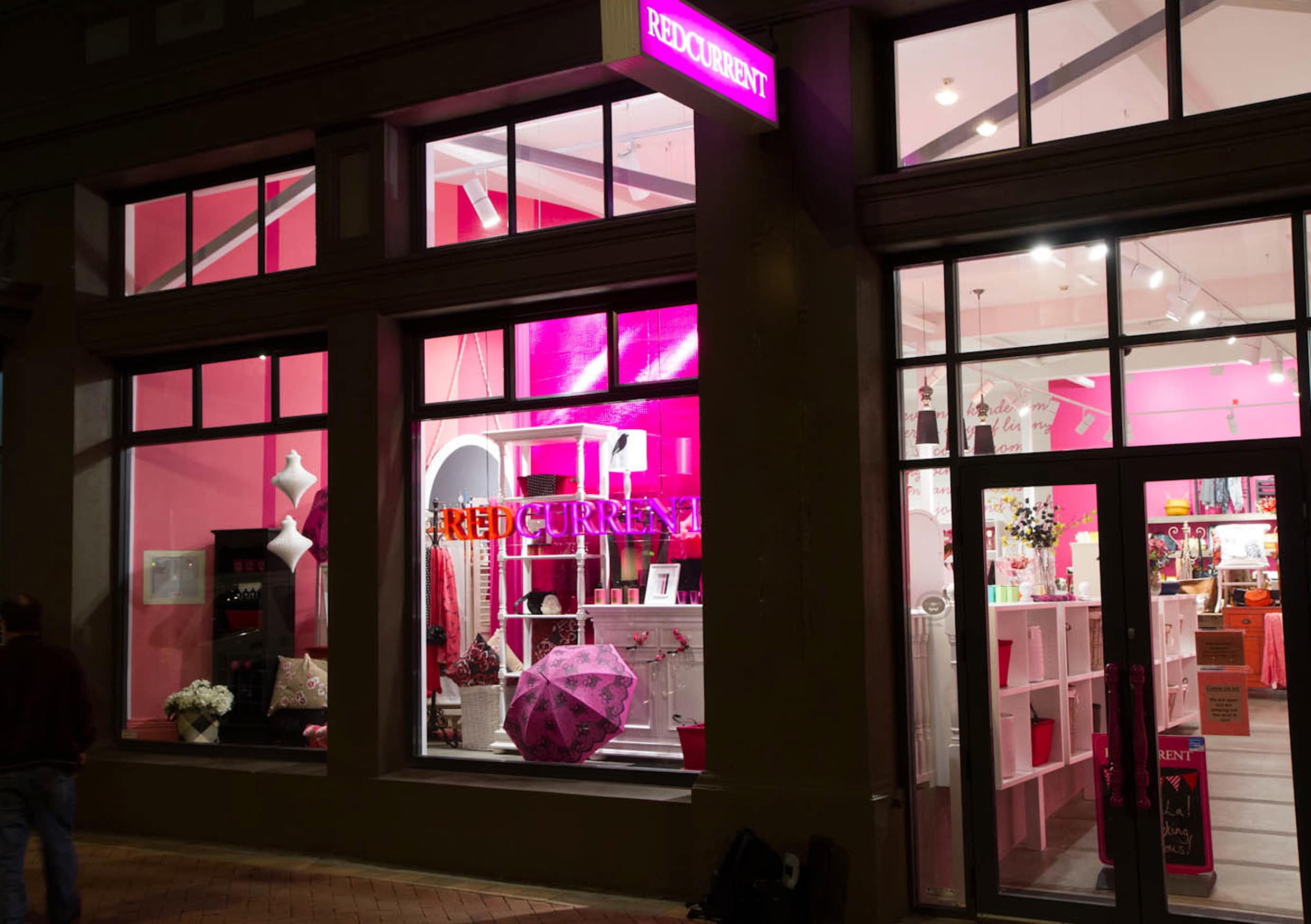
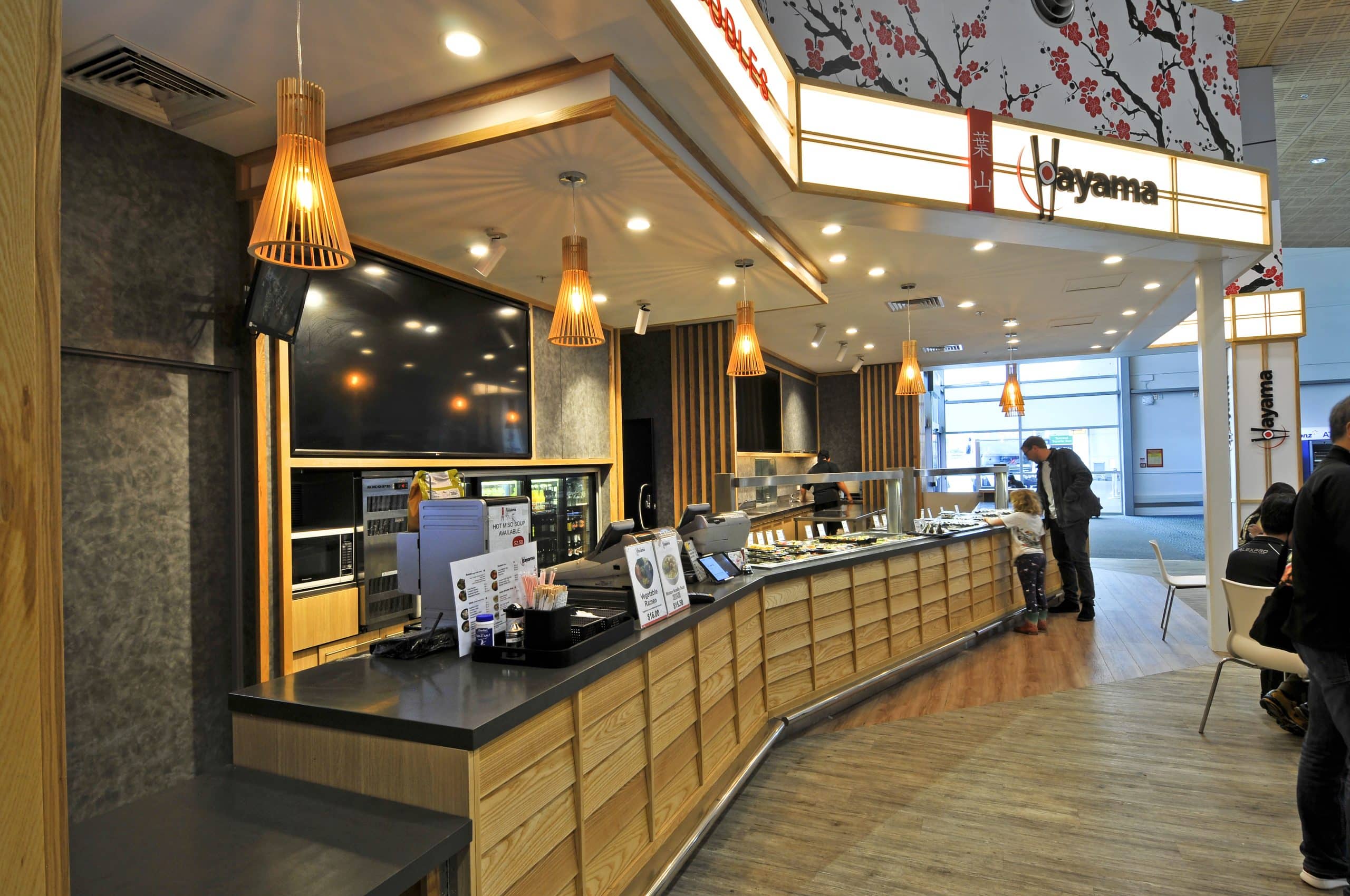
In a mall or airport the shopfront competes with every neighbour. For Redcurrent in Wellington, the shopfront windows glow day and night with a translucent pink honeycomb screen and neon signage. At Hayama at Auckland Domestic Airport we illuminated a bulkhead over the counter so a corner site was easier to spot, and it also lit the work surface below.
4. Choose colour temperature deliberately
Colour temperature, measured in kelvins (K), describes whether light looks warm or cool. The US Energy Information Administration notes that lamps around 2,500 K to 3,500 K look close to traditional incandescent and halogen light, with slightly orange tones, while higher colour temperatures look bluer. Many fashion and hospitality stores sit around the warm end; some tech and pharmacy stores choose cooler, neutral white. Pick one and use it consistently, because mixed colour temperatures make a store look patchy.
5. Insist on good colour rendering
The colour rendering index (CRI) measures how faithfully a light shows the true colours of objects, materials and skin. EN 12464-1 sets a minimum of Ra 80 (Ra is the standard CRI value) for shop sales areas, per this summary of the standard’s tables. For clothing, food and cosmetics, specify CRI 90 or higher so customers see colours the way they will look at home.
6. Use layering and contrast
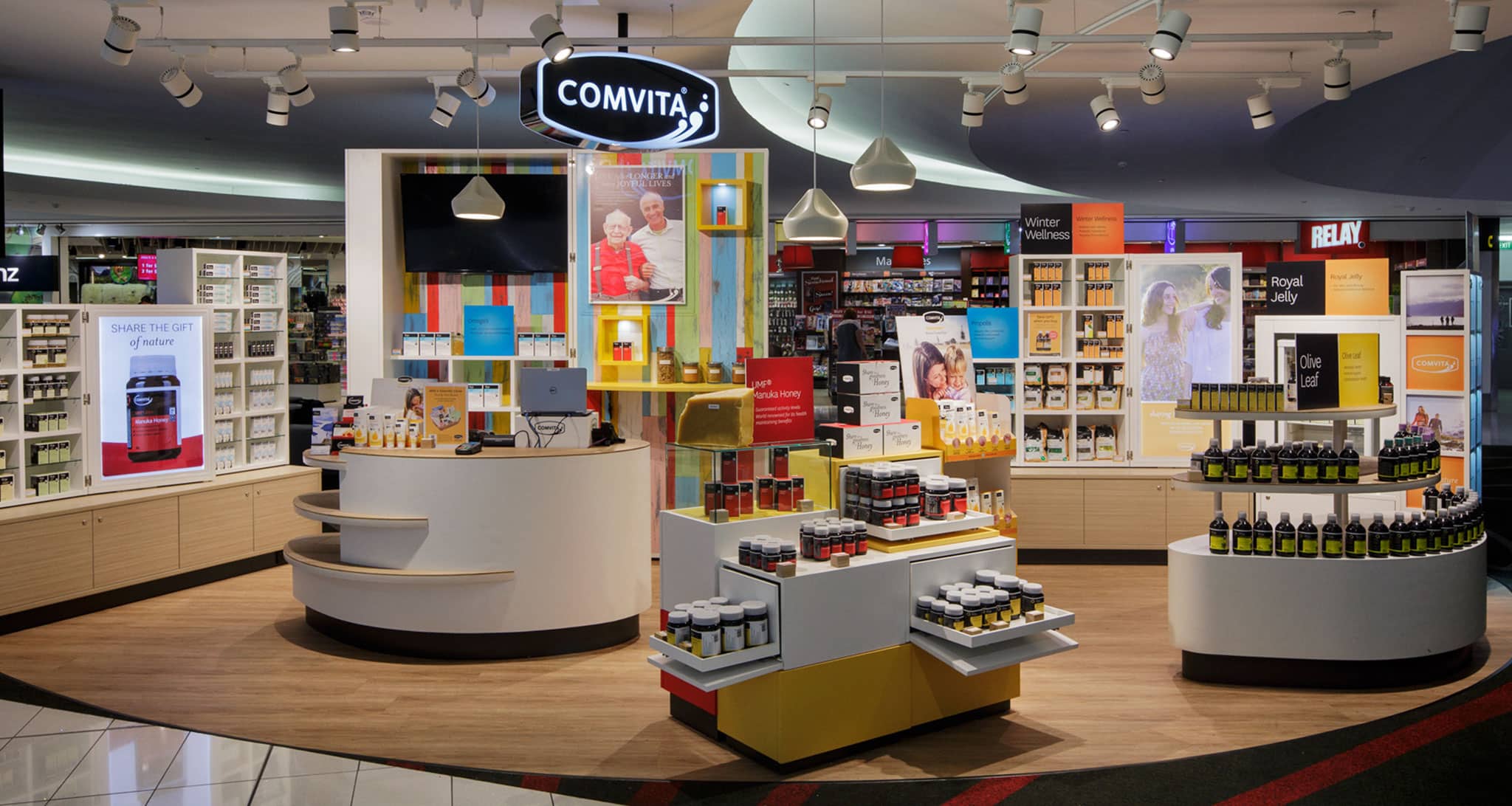
Keep general light comfortable and let accent lighting do the selling. On the Hayama landside store at Auckland Airport we chose warm-coloured lighting to bring out natural ash timber finishes. In Comvita’s airport kiosk, lighting “floats” below a ceiling that could not be modified.
7. Meet the basic light levels
EN 12464-1 sets maintained illuminance (the light level the design must keep over time) of 300 lux for a retail sales area and 500 lux for checkouts, with 500 lux suggested for supermarket sales areas. New Zealand designers often use the joint Australian and New Zealand AS/NZS 1680 series as well. These are minimums for safe, comfortable use; display areas are usually lit well above them.
| Area | Maintained illuminance (EN 12464-1) | Minimum Ra |
|---|---|---|
| Shop sales area | 300 lux | 80 |
| Supermarket sales area | 500 lux (recommended) | 80 |
| Checkout | 500 lux | 80 |
8. Work with low ceilings and difficult sites
Not every site has a clean ceiling to hang lights from. At Popo Dumplings in an airport food court, light levels in the area were very low, so we hid small LED spots where we could and added glass pendants reminiscent of old gas lamps.
9. Choose efficient LEDs and controls
According to EECA’s Gen Less guidance, switching to LEDs alone can cut lighting costs by up to 70%, and good design plus controls can cut them by up to 90%. LED lamps last around 25,000 to 30,000 hours, against 1,000 to 2,000 hours for incandescent bulbs. Dimming and zoning let you lower light in back-of-house and stock areas when they are not in use.
For larger buildings, energy use for lighting is also regulated. NZS 4243.2 sets lighting energy efficiency for non-residential buildings with a floor area over 300 m² and informs clause H1 of the New Zealand Building Code, according to Standards New Zealand.
10. Plan for change and maintenance
Merchandise moves, so lighting has to move with it. Track systems make it easy to re-aim spots for each season. Keep fittings clean and replace failed lamps promptly, and choose fittings your staff or electrician can maintain without specialist access equipment.
Common Retail Lighting Mistakes
- Lighting the floor and ceiling instead of the products.
- Mixing warm and cool lamps in the same space.
- Choosing cheap LEDs with poor colour rendering for clothing or food.
- Treating lighting as an electrical item added after the design is finished.
- Leaving every light on at full output when areas are empty.
If you are planning a new store or refit, our retail design team designs lighting as part of the whole fitout.
Frequently Asked Questions
What is the best lighting for a retail store?
Layered LED lighting: comfortable ambient light, adjustable accent lighting on products, and a visible, lit shopfront. Use one consistent colour temperature and a high colour rendering index so products look true to colour.
How many lux does a retail store need?
The European standard EN 12464-1 sets 300 lux for a shop sales area, 500 lux for checkouts, and recommends 500 lux for supermarket sales areas. Display areas are usually lit higher to stand out.
What colour temperature is best for retail?
There is no single answer. Warm light, around 2,500 K to 3,500 K, looks close to traditional halogen and suits many fashion, hospitality and premium stores; cooler, neutral white gives a brighter, more clinical feel. Use one temperature consistently.
What CRI should retail lighting have?
EN 12464-1 sets a minimum of Ra 80 for sales areas. For clothing, food and cosmetics, specify CRI 90 or higher so colours look accurate.
How much can LED lighting save a store?
EECA says switching to LEDs alone can cut lighting costs by up to 70%, and good design with lighting controls can save up to 90%.
Sources: EECA Gen Less, US EIA, EN 12464-1 tables (Techlumen), Standards New Zealand, Studio Gascoigne project pages.