A cafe attracts foot traffic when passers-by can see what it is in a few seconds, find the door easily and get a glimpse of something worth stepping in for. That comes down to the frontage, the visible life inside, an easy entrance and an interior that matches what the cafe sells. The ideas below are drawn from hospitality and retail projects Studio Gascoigne has designed in Auckland and Wellington.
Key Takeaways
- Design the frontage to be understood in seconds: clear name, strong colour or light, and a view of life inside.
- Make entering easy. A difficult entrance loses customers before they see the room.
- Show activity. Open kitchens, counters and people seated inside all signal that a place is worth a visit.
- Match the room to the offer, so the cafe is easy to categorise and remember.
- Plan outdoor seating early, and check the council licence rules for footpath use.
- Measure before and after, for example walk-ins per hour, so you know what worked.
Cafe Design Ideas That Attract Customers
1. Make the frontage tell the story in seconds
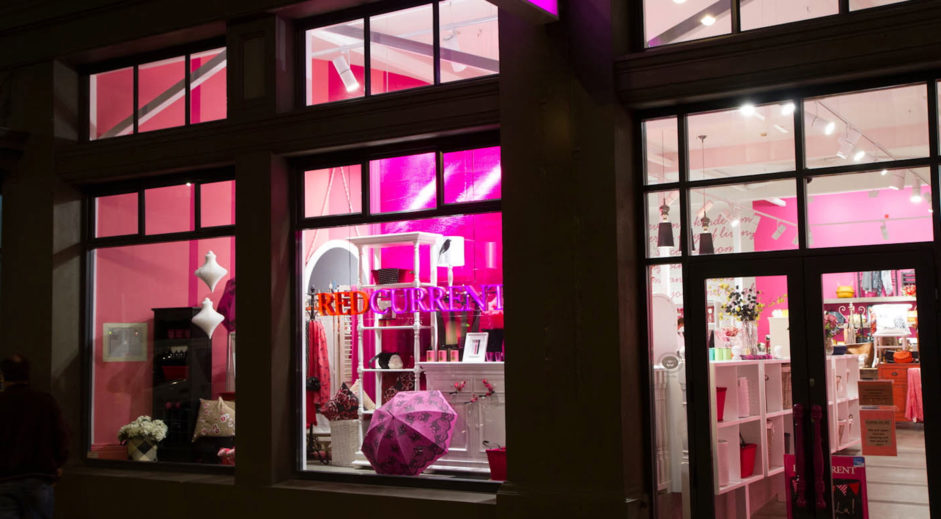
People decide whether to cross the threshold quickly, often while walking past. A clear name, a distinct colour or light source and a view into the room do most of the work. Redcurrent in Wellington is a retail store rather than a cafe, but its lesson applies: the shopfront windows glow day and night with a translucent honeycomb screen and neon signage, and the client reports customers “stopping in their tracks to enter”.
2. Make the entrance easy
Redcurrent’s designers identified the long entry ramp as the biggest challenge, because the question was how to get customers to come in at all. The answer was strong colour and a glimpse into the store that made the ramp feel like an invitation. For a cafe, check that the door is obvious, the threshold is level or ramped, and the route from the footpath to the counter is clear. New Zealand’s Building Code sets access requirements for public buildings (clause D1, which refers to NZS 4121), so your designer should check the current documents.
3. Show people and activity
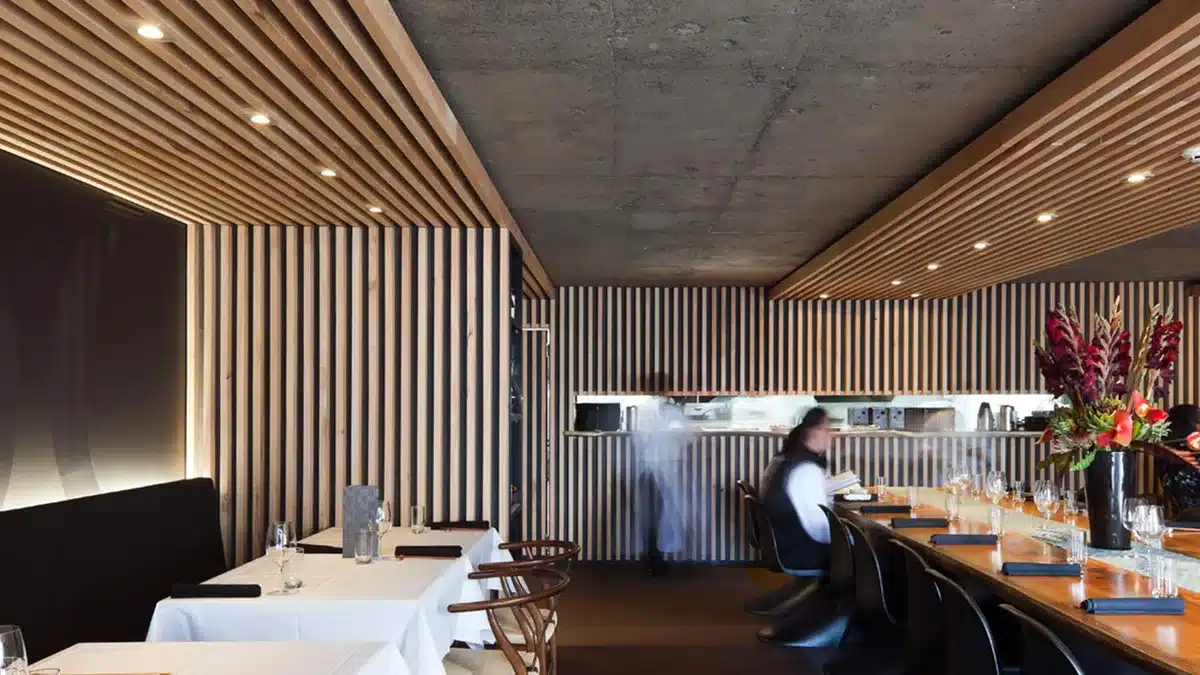
An empty room says “not worth it” and a busy one says the opposite. Design so that life is visible from outside and from inside. At Hayama, a sushi kiosk at Auckland Airport, the cooking and serving area is visible from every side. At Popo Dumplings, bar seats were added beside the kiosk so guests could watch the dumplings being made up close, which turned preparation into something to see.
4. Give the cafe one signature feature
A single memorable element is easier to recognise and share than a dozen small touches. At Popo Dumplings the kiosk sits in the open food court “as a beacon to anyone wanting something more authentic than typical food-court offerings”, in the words of the project write-up. At Silk Road, commissioned street-scene murals and neon street-food signs gave a pan-Asian restaurant a clear identity without listing every cuisine.
5. Match the room to the offer
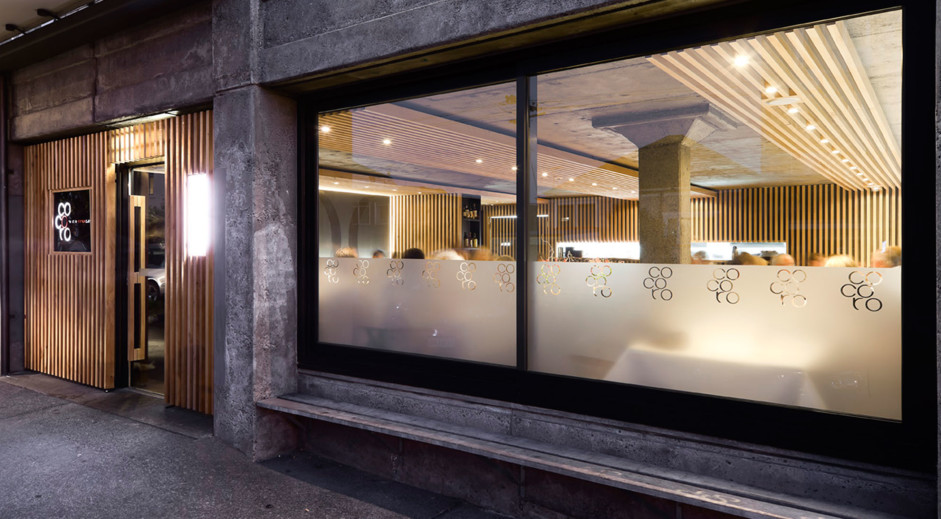
Guests should understand from the room what they will eat and what it will cost. Oko Dessert Kitchen uses white Carrara marble, gold and timber to hint at a French patisserie, premium enough for its prices yet not so grand that it discourages casual coffee and ice cream customers. The store has traded strongly since opening and is often packed until nearly midnight. Cocoro uses natural, recyclable materials and a simple palette to fit its modern Japanese menu.
6. Plan outdoor seating properly
Tables outside show that a place is open and busy. In Auckland, outdoor dining on the footpath or other public space needs a licence from Auckland Council, and its published rules call for leaving at least 1.8 m of clear footpath for pedestrians. Furniture has to be movable, weather-resistant and stored inside at the end of the trading day, and licensed outdoor dining areas must be smokefree. Check the council’s current outdoor dining licence rules before you design the layout.
7. Light the room in layers
Use ambient light for the space, task light where people work or eat, and accent light for features. One flat wash from the ceiling makes everything look the same. At Popo Dumplings, where light levels are very low, the team hid small LED spots and added glass pendants reminiscent of old gas lamps. The studio’s lighting design work covers this in more detail.
8. Give people a reason to stay
Foot traffic only pays if guests come in, sit and come back. Comfortable seating, a good mix of table sizes and clear routes all help. Our cafe seating layout guide covers banquettes, communal tables and counters in detail.
9. Think carefully about extras like Wi-Fi and screens
Wi-Fi, charging points and digital menus suit some cafes and not others. Free Wi-Fi and plugs attract laptop workers, who can stay for hours and occupy tables meant for groups. If you want that crowd, give them a counter or wall seating with power. If you want fast turnover, leave them out. Decide based on the guests you want.
Low-Cost Ways to Improve a Cafe’s Kerb Appeal
- Repaint the frontage and door in a colour that stands out from neighbours.
- Replace a dim or cluttered sign with a clear name and one line about what you sell.
- Clean the windows and remove posters so passers-by can see inside.
- Add warm lighting behind the glass for the evening.
- Put a chalkboard or menu board where walkers can read it without stopping.
- Set out a few tables if the footpath licence and space allow.
How to Tell If a Design Change Is Working
Set a baseline before you change anything, then compare afterwards. Useful measures are walk-ins per hour at busy times, the share of walk-ins who buy, average spend and how long people stay. Give a change a few weeks before you judge it, because regulars need time to notice and trade varies with the season. Change one thing at a time where you can, so you know what caused the difference.
Working With a Hospitality Designer in Auckland
Studio Gascoigne designs cafes, restaurants, bars and hotels across New Zealand. The team of registered architects and interior designers covers layout, seating, lighting and documentation together. See the hospitality design service, our guide to restaurant interior design or the portfolio.
Frequently Asked Questions
How do I attract more customers to my cafe?
Make the frontage clear and inviting, show life inside, make the entrance easy and match the room to what you sell. Small changes such as a clearer sign, cleaner windows and better lighting can help before you commit to a full refit.
What makes a cafe design eye-catching from the street?
A clear name, a strong colour or lighting and a view into the room. Redcurrent in Wellington used glowing windows and neon signage, and its client reports customers stopping in their tracks to enter.
Do I need a licence for outdoor seating in Auckland?
Yes, if tables or customers are on the footpath or other public space. Auckland Council requires an outdoor dining licence and its published rules call for at least 1.8 m of clear footpath. Check the council’s current rules before you plan.
Should a cafe offer free Wi-Fi?
It depends on who you want. Wi-Fi and power points attract laptop users who stay for hours, which suits cafes with spare space and a slower trade. Cafes that rely on fast turnover usually leave them out or limit them to certain seats.
How do I know if a design change increased foot traffic?
Record walk-ins per hour, the share who buy, average spend and dwell time before the change and after it. Allow a few weeks, and change one thing at a time where possible.
How much does it cost to redesign a cafe?
It varies widely with the size of the space, the building condition and the finish. A designer can give a realistic range once they know the brief and have seen the site. Small updates such as paint, lighting and signage cost far less than a full fit-out.
Sources: Studio Gascoigne project pages (Redcurrent Wellington, Hayama, Popo Dumplings, Silk Road, Oko, Cocoro), Auckland Council outdoor dining licence rules, and the New Zealand Building Code clause D1 and NZS 4121 via Building Performance (MBIE).