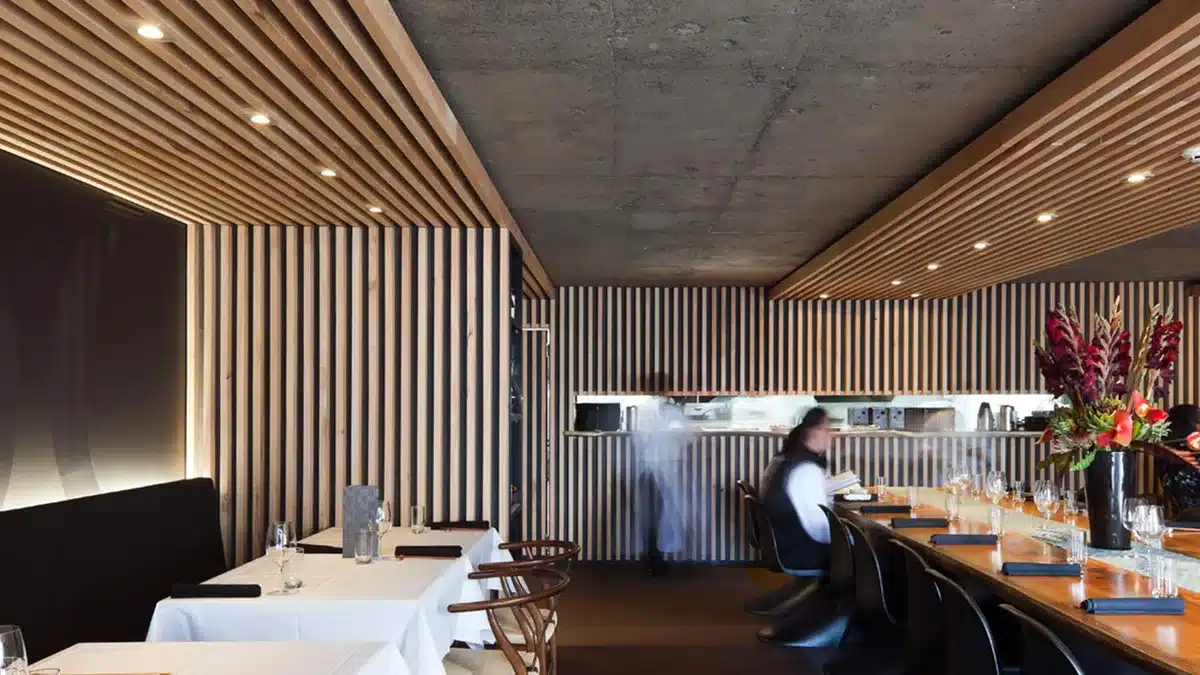
The most sustainable interior finish is usually the one that lasts longest in its location, can be repaired rather than replaced, and is honest about what it is made of. Pick finishes surface by surface: hard-wearing floors for traffic, washable walls where people touch them, joinery that can be refinished, and products with an independent ecolabel or Environmental Product Declaration (EPD) so you are comparing evidence, not marketing.
Key Takeaways
- Durability is the first sustainability test. A finish replaced twice as often has roughly twice the material impact.
- Choose by surface and use: floors, walls, joinery and benchtops each wear differently.
- Simple, honest materials such as timber, ply, concrete and tile can be repaired and refinished.
- Check for an independent ecolabel such as Eco Choice Aotearoa, or an EPD for carbon data.
- Low-VOC paints, sealers and adhesives improve indoor air, especially in spaces that open straight after fitout.
What Makes an Interior Finish Sustainable?
- Long life in its location: it stands up to the traffic, cleaning and knocks it will actually get.
- Repairable: it can be sanded, patched, re-oiled or recoated instead of ripped out.
- Healthy: it releases few volatile organic compounds (VOCs) as it cures and in use.
- Transparent: the maker can show independent certification or verified life-cycle data.
- Easy to separate at the end: mechanically fixed rather than glued, so it can be reused or recycled.
Sustainable Finishes by Surface
| Surface | Durable, lower-impact options | What to check |
|---|---|---|
| Floors | Exposed or polished concrete, solid or engineered timber, ceramic or stone tile | Slip resistance, how it can be refinished, adhesive and sealer VOCs |
| Walls | Low-VOC paint, timber or ply lining, tile in wet and splash zones | Washability, ecolabel on the paint, fixing method for linings |
| Joinery | Plywood, solid timber, durable laminates on low-emission boards | Edge durability, board emissions, whether it can be reconfigured |
| Benchtops and counters | Stainless steel, solid timber, stone or compact laminate | Heat and scratch resistance, sealing needs, repairability |
How We Use Honest Materials in Real Projects
Many of our retail and hospitality fitouts rely on a short list of simple, hard-wearing materials:
- Icebreaker, Auckland Airport: New Zealand pine or ply for fixtures and ceiling beams, a natural timber floor, stone tiles that echo South Island schist, cementitious paint and a back wall clad in real New Zealand moss.
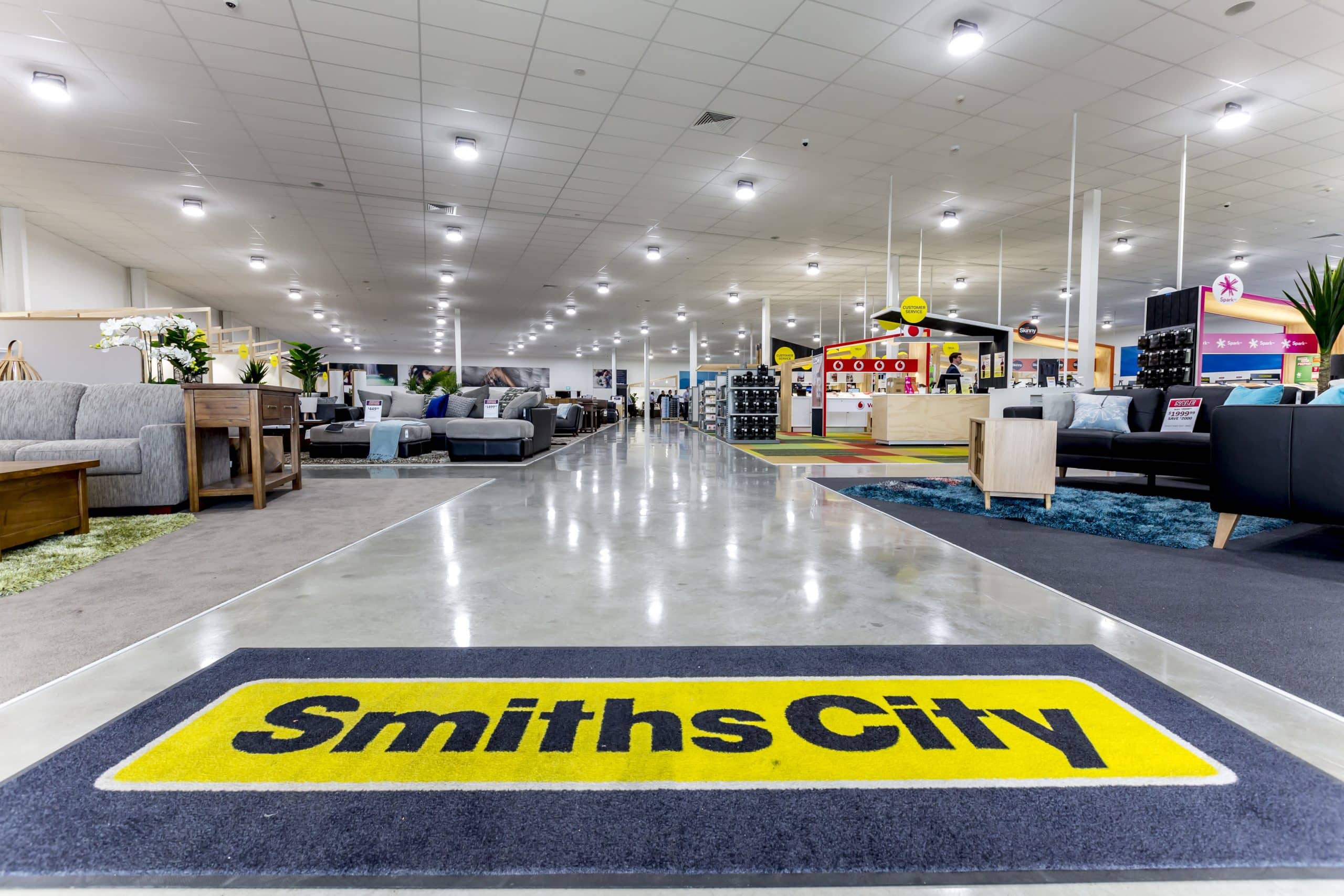
- Smiths City: fittings largely in pine and ply to embrace the New Zealand building aesthetic.
- Cali Press: a very simple palette of blonded wooden floor, plywood walls and joinery, white tiles, black steel detailing and stainless steel benches.
- Wild Pair: off-white painted surfaces, concrete floors and hand-sanded cedar ship-lap lining for a deliberately worn look.
- Halong Bay, Auckland Airport: a palette deliberately limited to natural timber, rattan and metal finishes.
Budget always plays a part. At Wright’s Jewellers we used a light ash timber-look laminate for much of the joinery because the budget would not stretch to real timber. A good laminate on a durable board is a sensible choice when it is specified to last.

How to Check Sustainability Claims
- Look for an independent ecolabel. Eco Choice Aotearoa is New Zealand’s official ecolabel and has a product finder for certified products, including paints.
- Ask for an EPD. An Environmental Product Declaration is a verified document reporting a product’s life-cycle impacts, including carbon. It does not rank products, but lets you compare them fairly.
- Read the technical data sheet. It shows VOC content, cleaning, recoating and expected life.
- Check the whole system. A low-VOC top coat over a solvent-heavy primer or adhesive gains little.
- Be wary of vague words. “Eco”, “natural” and “green” mean nothing on their own without certification or data.
Why Low-VOC Finishes Matter
VOCs are gases released by many paints, sealers, adhesives and new furnishings as they dry and cure. The US EPA says concentrations of many VOCs are consistently higher indoors, up to ten times higher than outdoors. Shops and cafes often open soon after a fitout, so low-VOC products help staff and customers. Our guide to low-VOC paints in New Zealand covers labels and how to choose.
Common Mistakes
- Choosing a finish for looks alone and replacing it within a year because it cannot take the wear.
- Gluing everything down, so nothing can be reused at the next refit.
- Specifying a sustainable finish over a high-emission substrate or adhesive.
- Relying on a brand’s own claims instead of an ecolabel or EPD.
For the bigger picture, including reuse and embodied carbon, see our guide to low carbon interiors.
Frequently Asked Questions
What are sustainable interior finishes?
Surface materials such as flooring, wall linings, paint, joinery and benchtops chosen to last, to be repairable, to release few VOCs and to have verified environmental credentials.
Which flooring is most sustainable for a commercial interior?
Usually the most durable option for the traffic it gets. Exposed or polished concrete, timber that can be sanded and refinished, and tile all last a long time when they suit the use.
How do I know if a finish is really eco-friendly?
Look for an independent ecolabel such as Eco Choice Aotearoa, ask for an Environmental Product Declaration, and read the technical data sheet rather than relying on marketing words.
Are laminates sustainable?
They can be a sensible choice when they are durable, on a low-emission board, and specified to last. Short-lived finishes that need replacing often are the bigger problem.
Do sustainable finishes cost more?
Some do upfront, but a finish that lasts longer and can be repaired avoids the cost of early replacement, which often makes it cheaper over the life of the fitout.
Sources: Eco Choice Aotearoa, EPD Australasia, US EPA, Studio Gascoigne project pages.